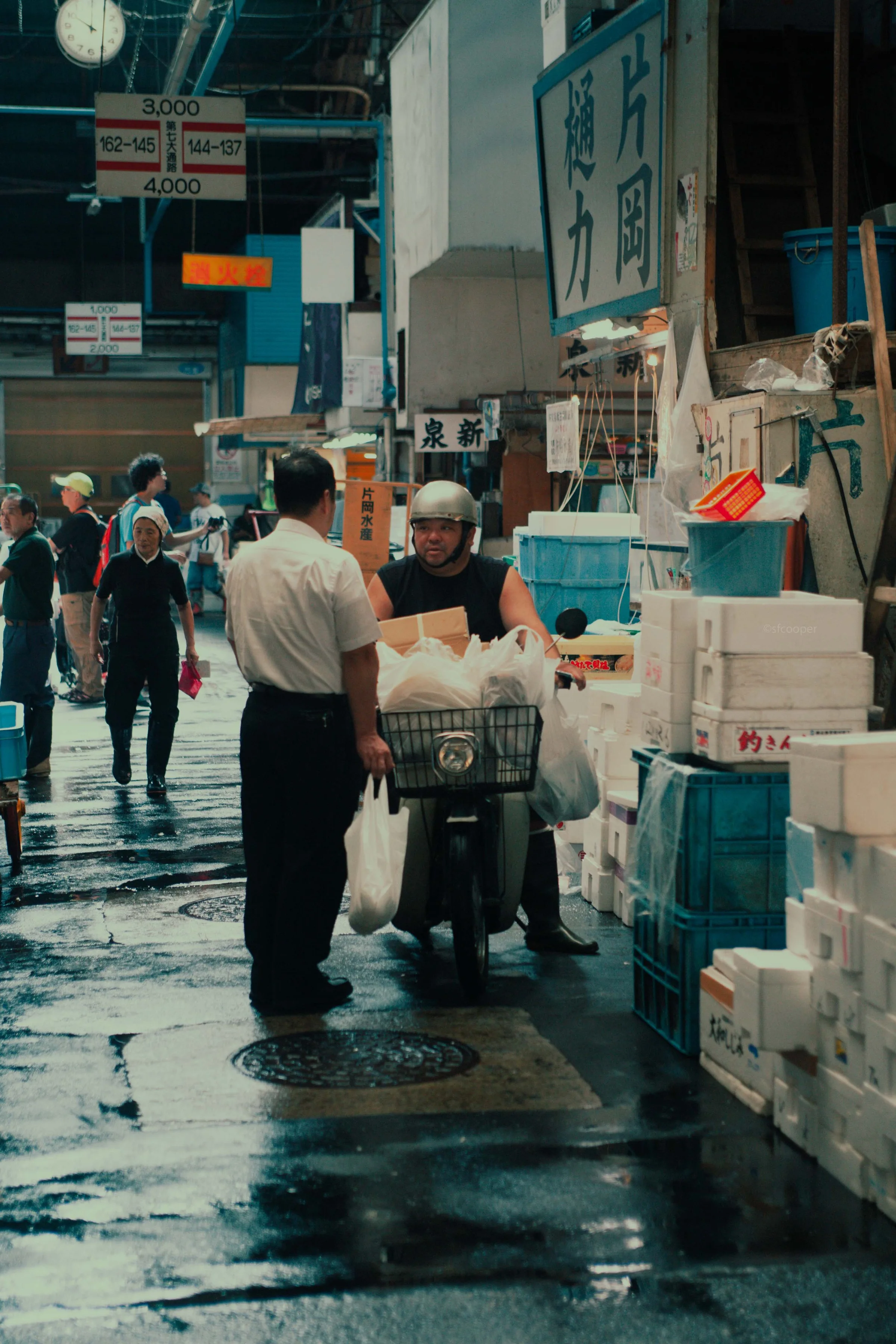
A wet, dimly lit market lane where a man in a white shirt talks to a rider on a delivery scooter loaded with white bags, polystyrene boxes stacked beside them.

Tsukiji Fish Market

Tokyo, Japan ·

The Tsukiji Fish Market, in Tokyo, Japan, was established in 1935, was the most significant wholesale fish and seafood market globally. The bustling market brimmed with life, offering an assortment of fresh seafood, fruits, vegetables, and other food-related goods. At its peak, it was known to handle over 2,000 tons of marine products per day.

The wholesale business moved to the new Toyosu Market in 2018, but the old Tsukiji Market, now Tsukiji Uogashi, continues to operate as a food market where consumers can still enjoy the rich food culture of Tsukiji.
A wet, dimly lit market lane where a man in a white shirt talks to a rider on a delivery scooter loaded with white bags, polystyrene boxes stacked beside them.
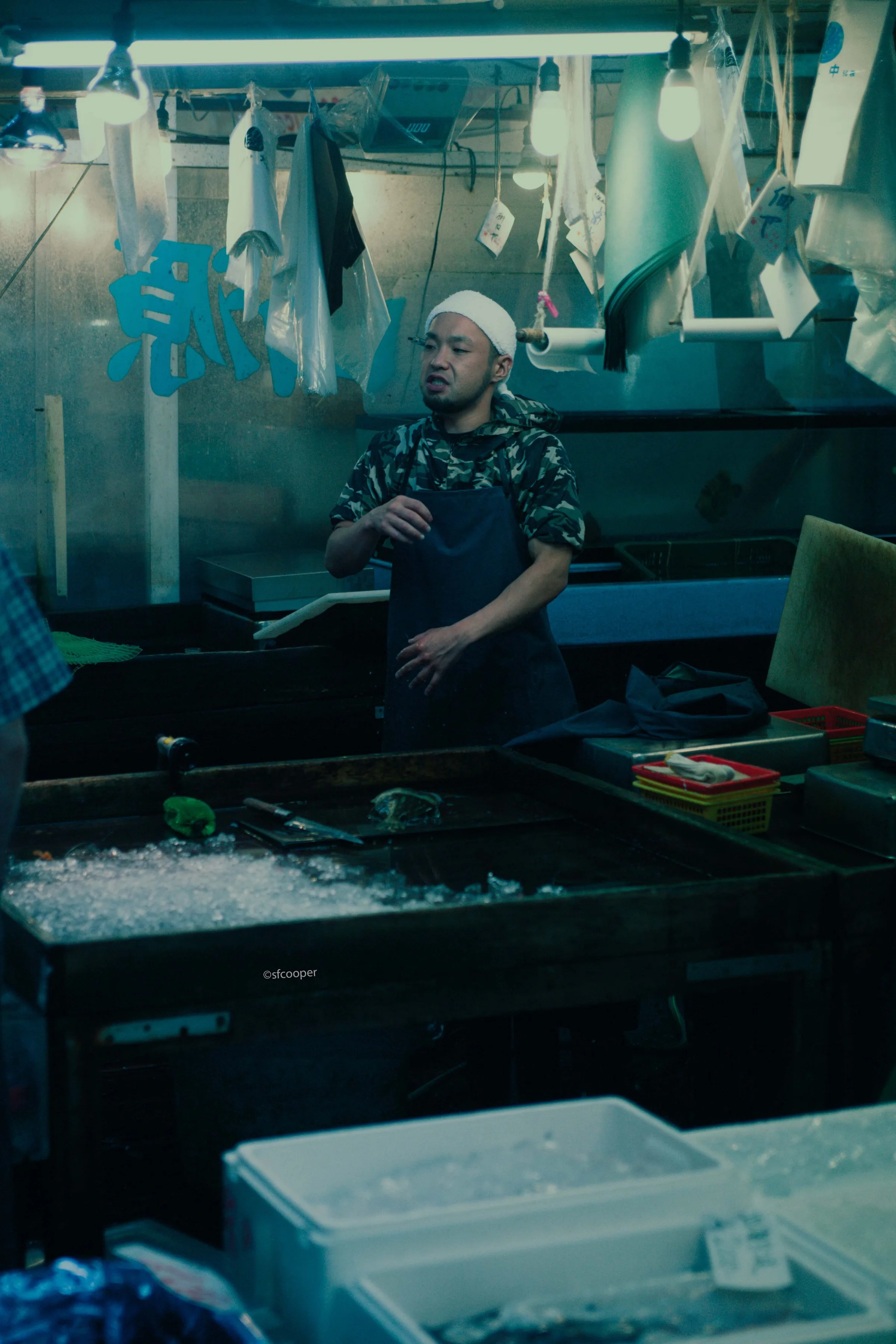
A fishmonger in a white cap and blue apron stands behind a counter of crushed ice, with hanging cloths and strip lights behind him.

The market was closed to non-trade visitors early on the morning whilst the famous tuna auction was happening, but visitors are allowed in after to stroll around the market and see what’s left.
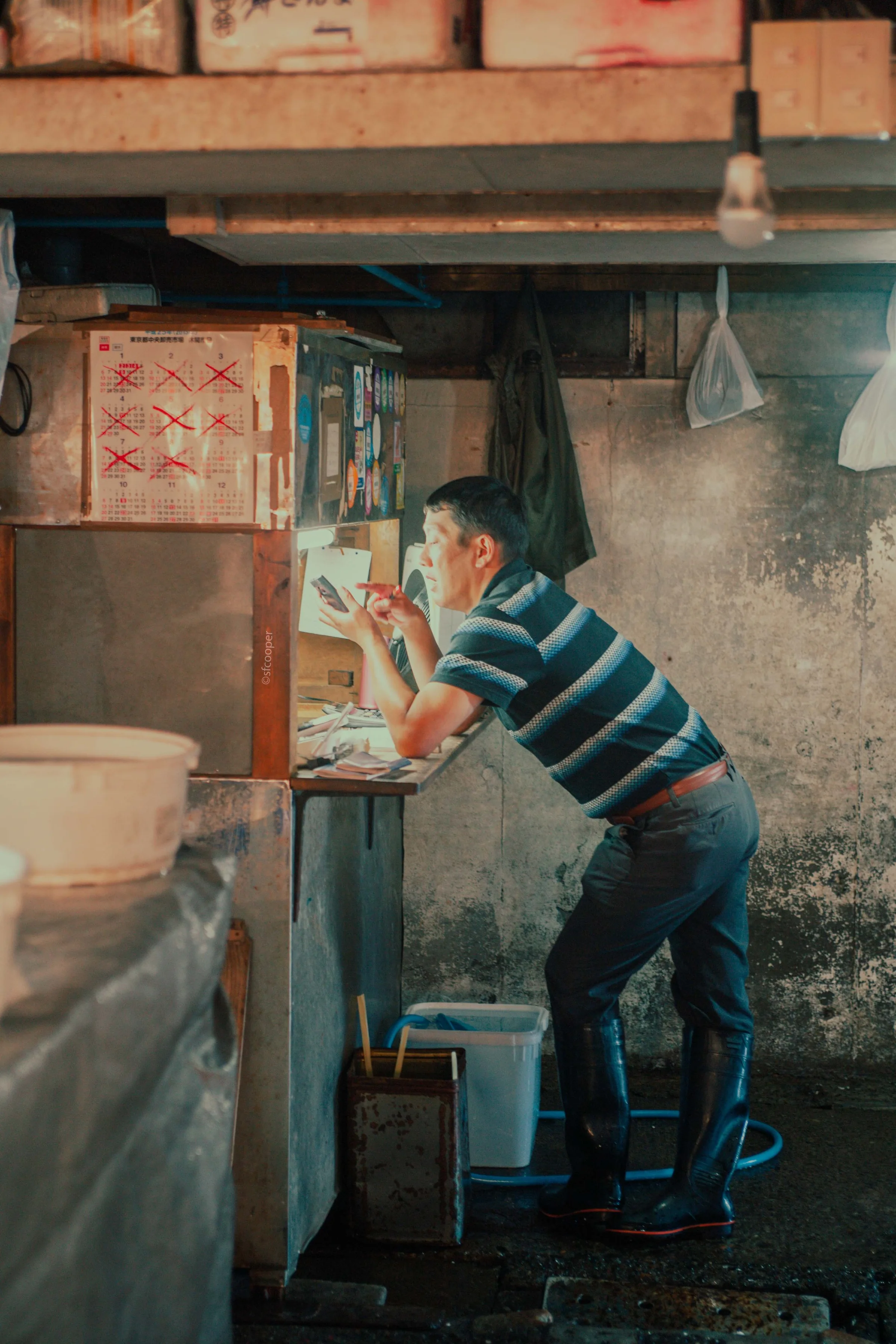
A man in a striped polo shirt and rubber boots leans on a counter, looking down at something in his hand beneath a bare bulb.
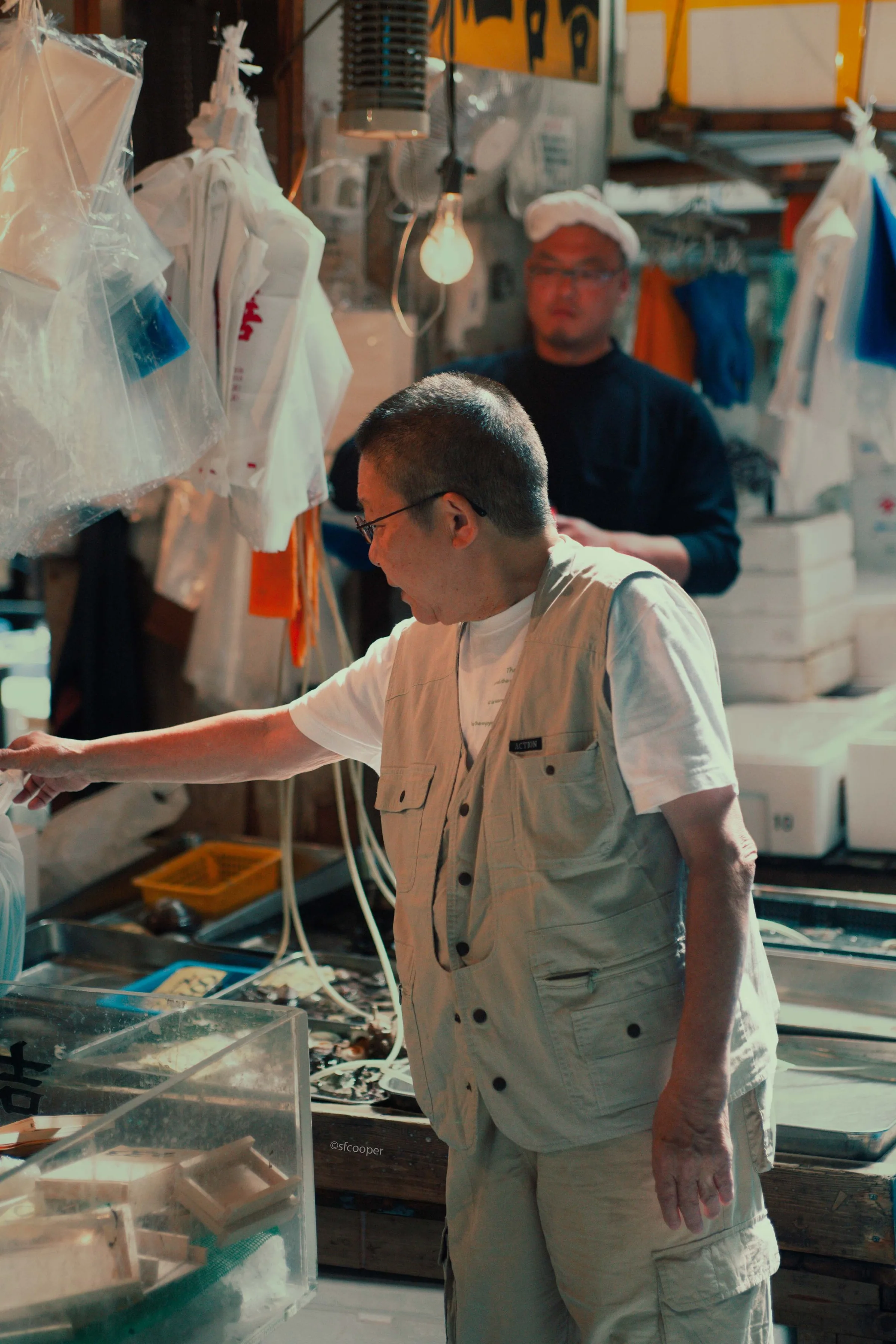
A man in a utility vest reaches out towards a stall's tanks, while a worker in a white cap stands behind him among hanging plastic bags.
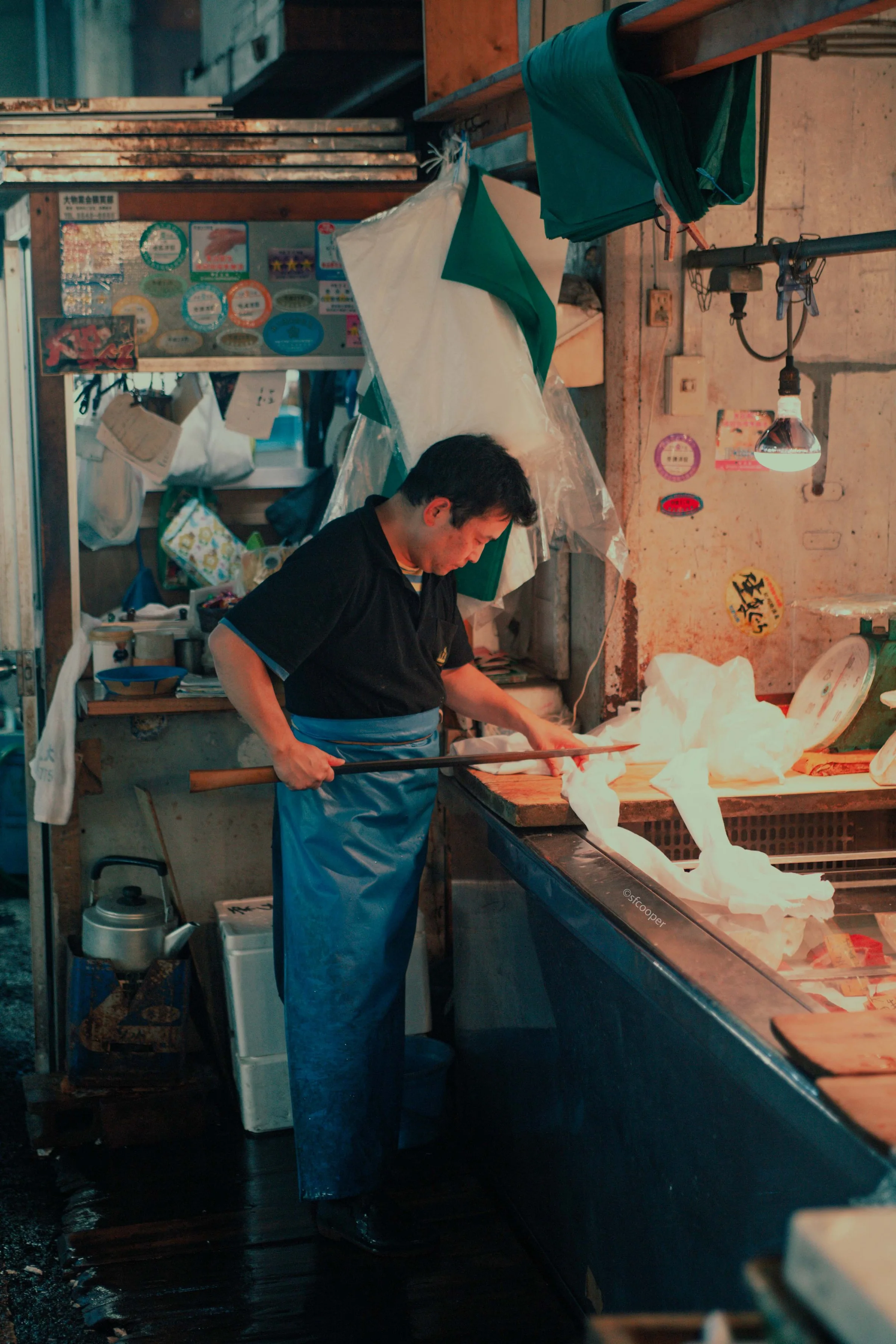
A stallholder in a black T-shirt and blue apron works at a counter in a cramped stall lit by a bare bulb, a kettle on a shelf behind.
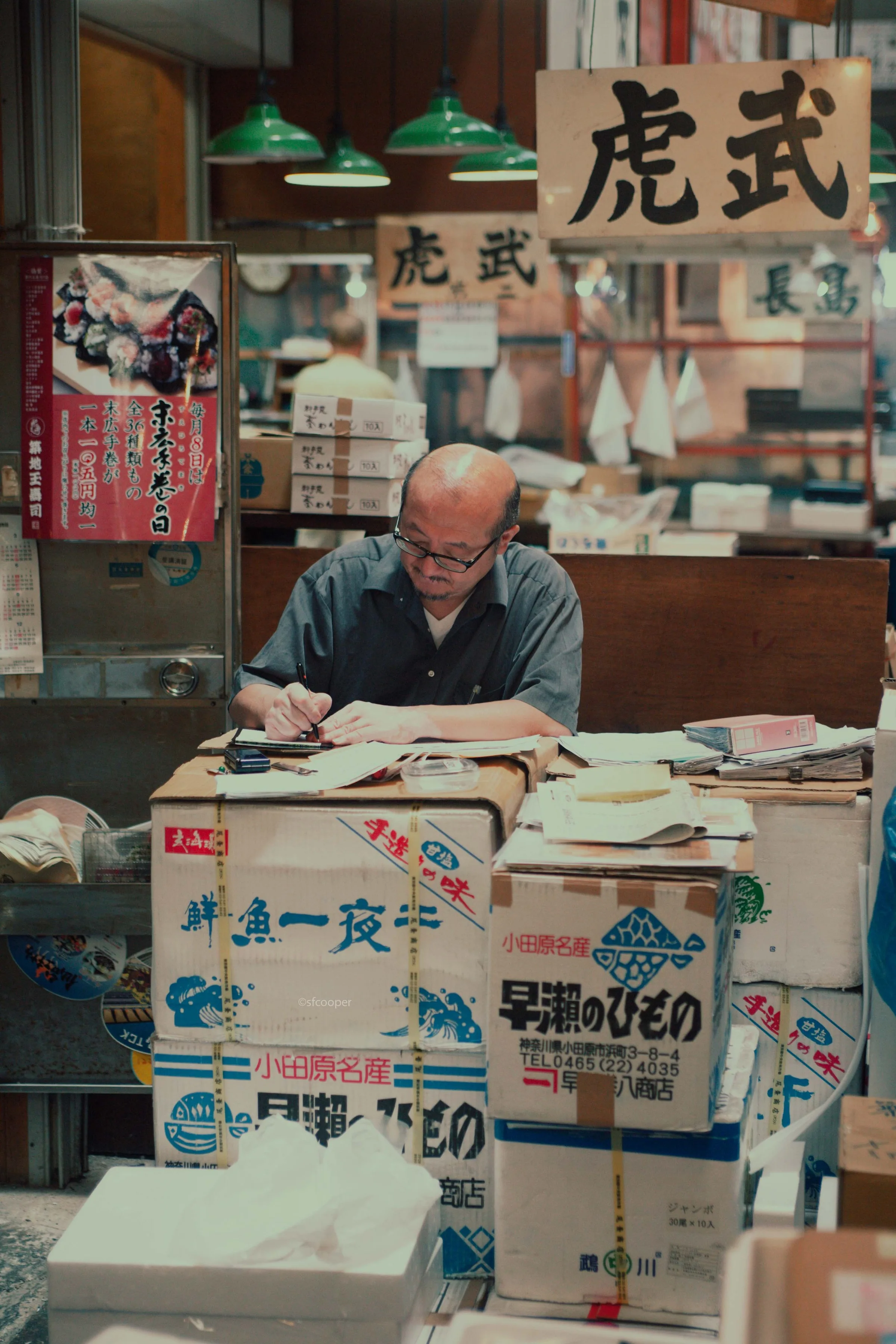
A man in glasses sits writing among stacked cardboard boxes printed with Japanese characters, beneath large wooden signs of kanji.

Tsukiji's importance extends beyond being a market. It has been a fundamental part of Tokyo's culinary culture and a significant influence on global perceptions of Japanese cuisine. The dedication to quality and craft seen at the Tsukiji Fish Market is a testament to the Japanese philosophy of 'shokunin,' a deep commitment to one's craft.
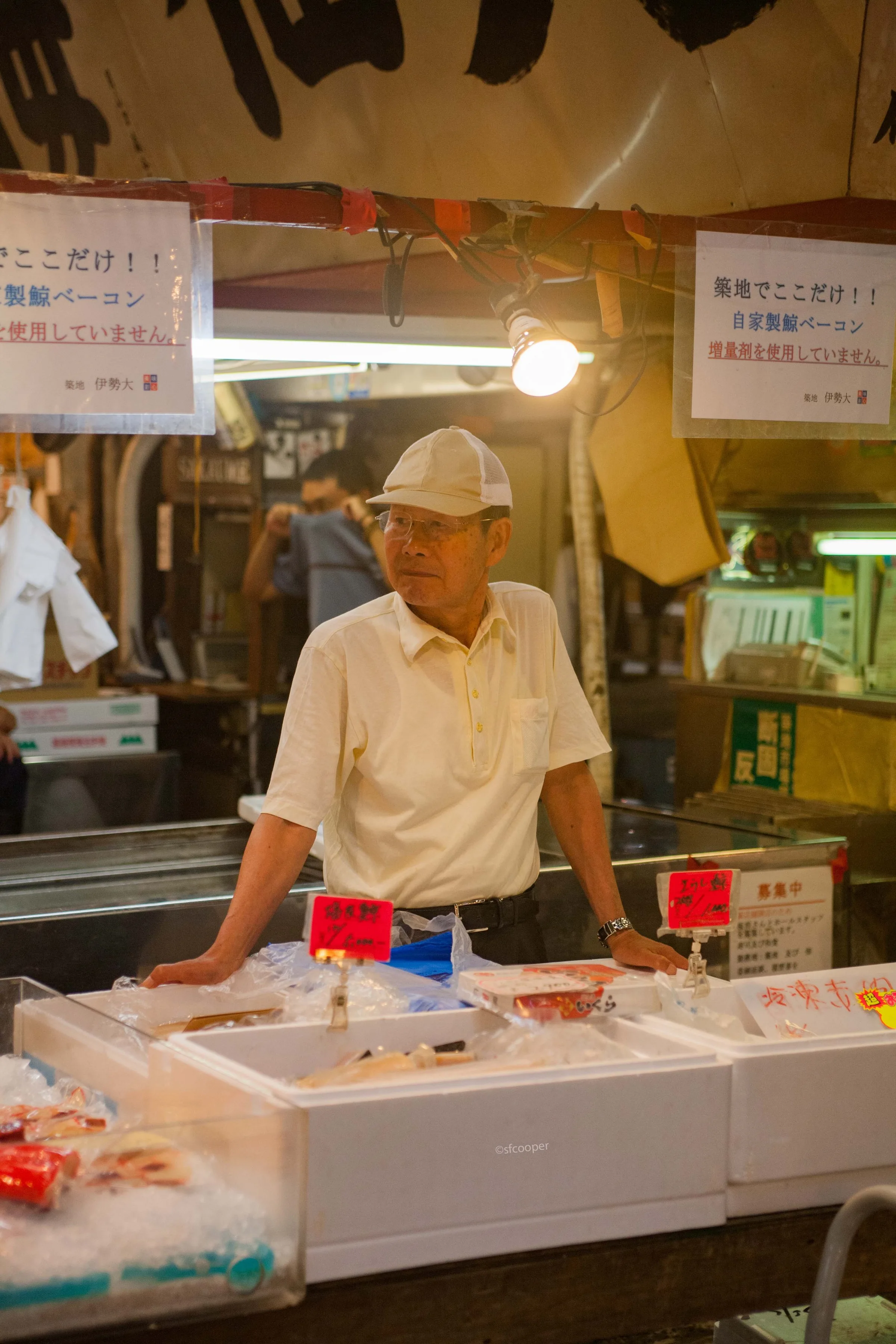
An older stallholder in a pale cap and cream shirt leans on a counter of fish on ice, with red price tags and handwritten notices around him.
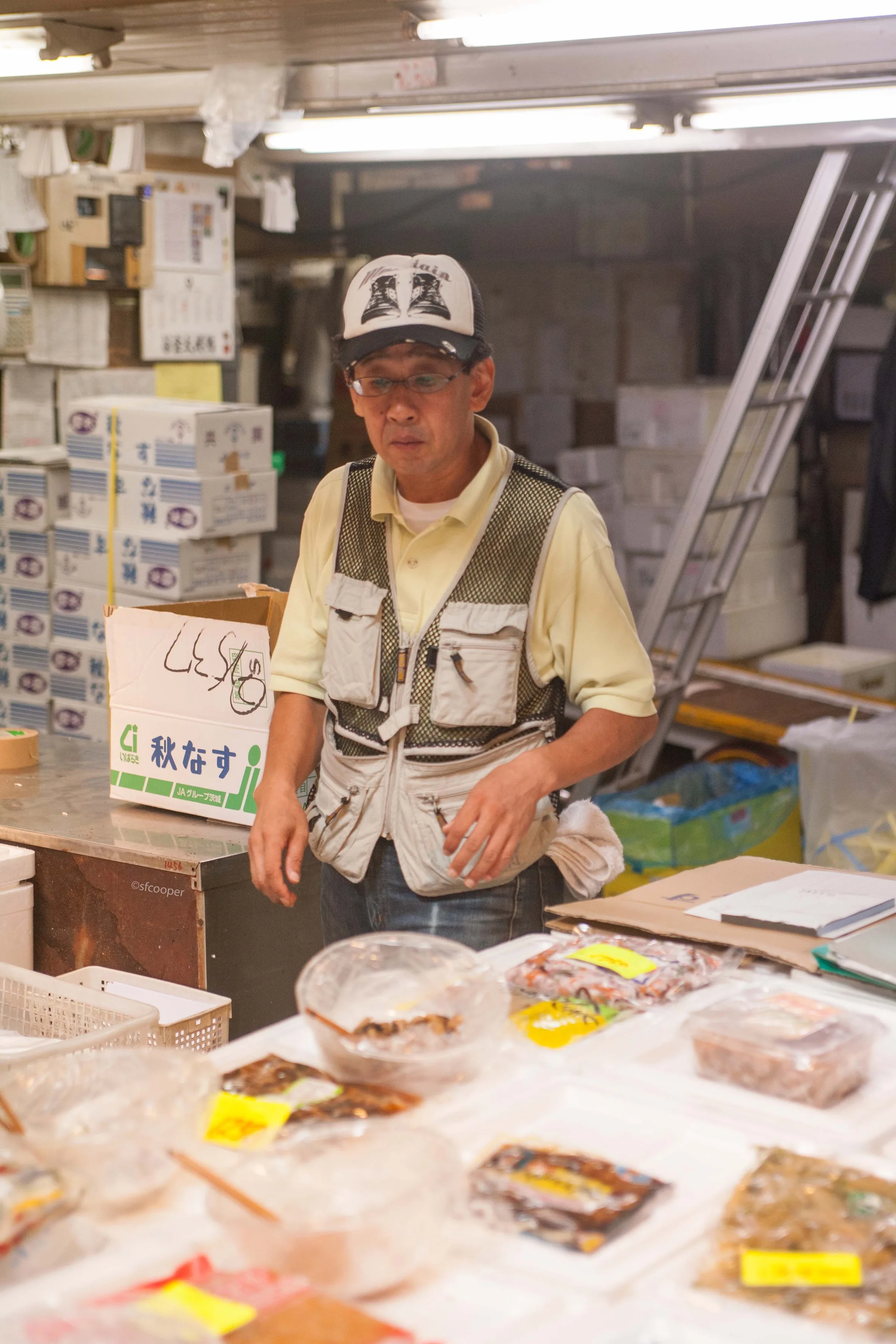
A man in a cap, glasses and a mesh vest stands behind a counter of packaged seafood with yellow price labels, boxes stacked on shelves behind him.

The tuna auctions showcased the importance and value of quality seafood in Japanese cuisine, particularly sushi. Bluefin tuna, for instance, is the most highly prized fish for sushi and sashimi in Japan.

Post-auction, visitors could venture into the market's outer section, teeming with small sushi counters, food stalls, and shops selling an assortment of Japanese kitchen tools, tea, and groceries.
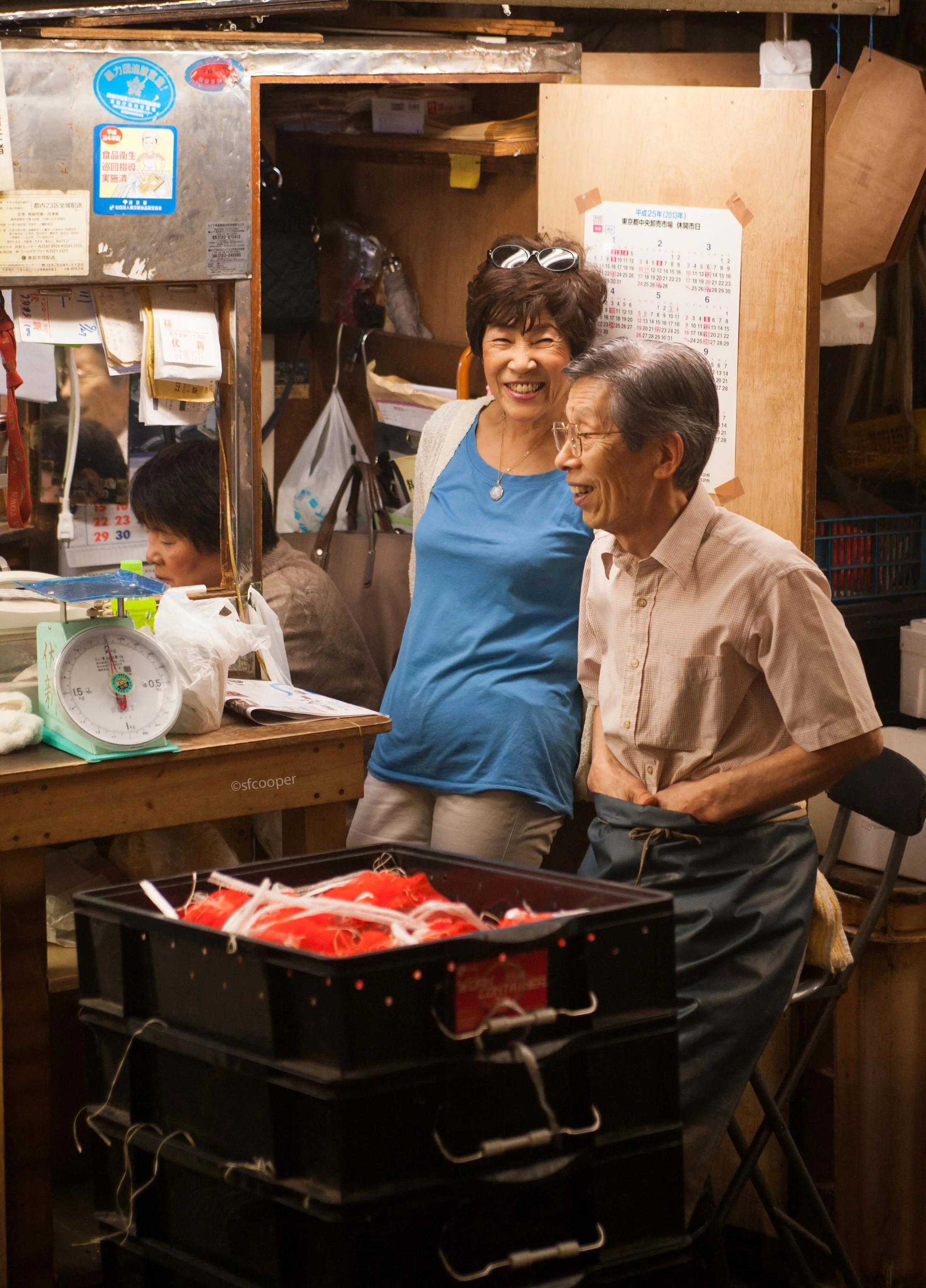
An older man and woman stand smiling side by side in a cluttered stall, a black crate of red seafood in front of them.
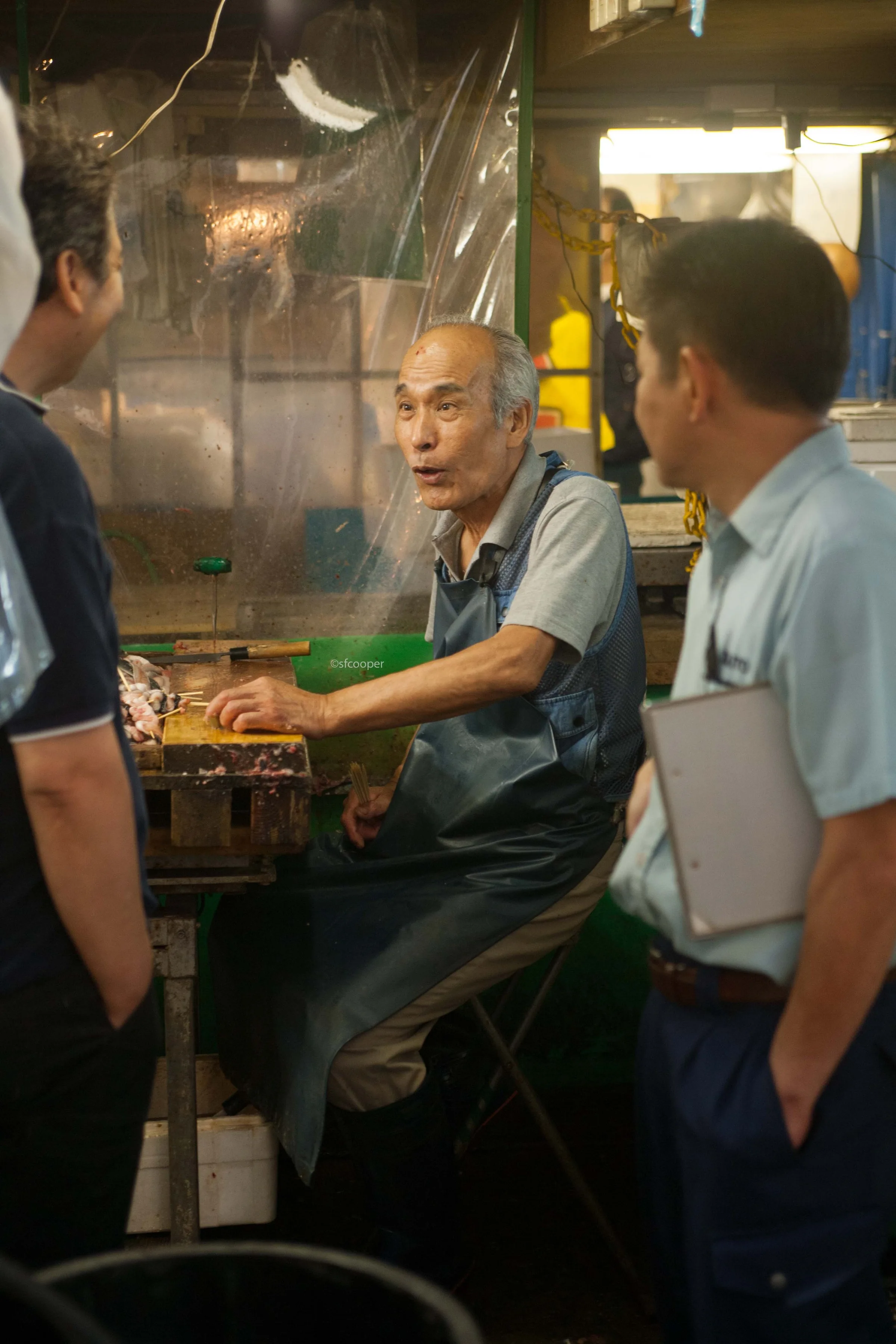
Two men in light shirts stand talking to a seated man in a blue apron, who gestures as he speaks, in a dimly lit market stall.
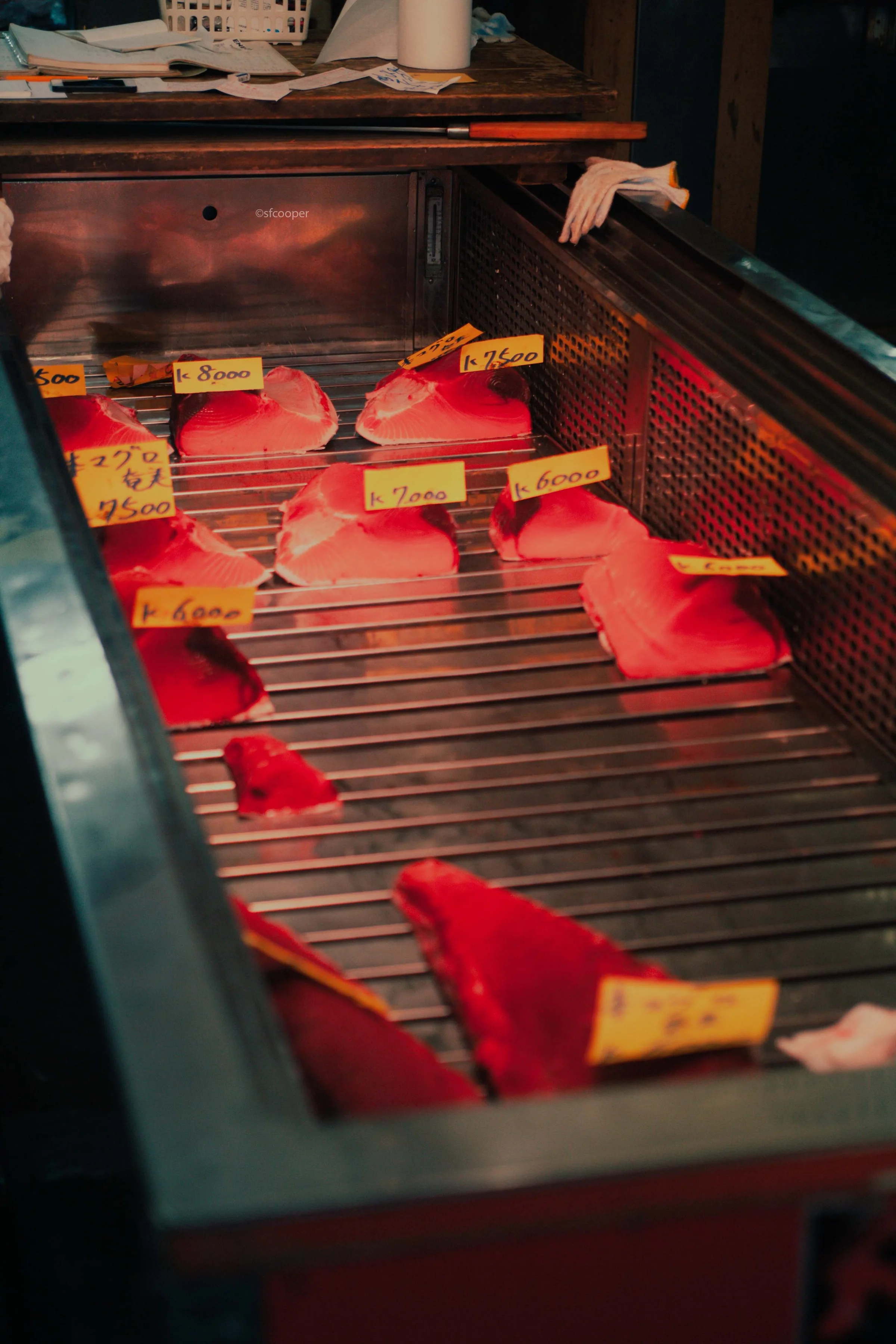
Dark red cuts of raw fish laid out on a rack in a display case, each with a yellow handwritten price tag.
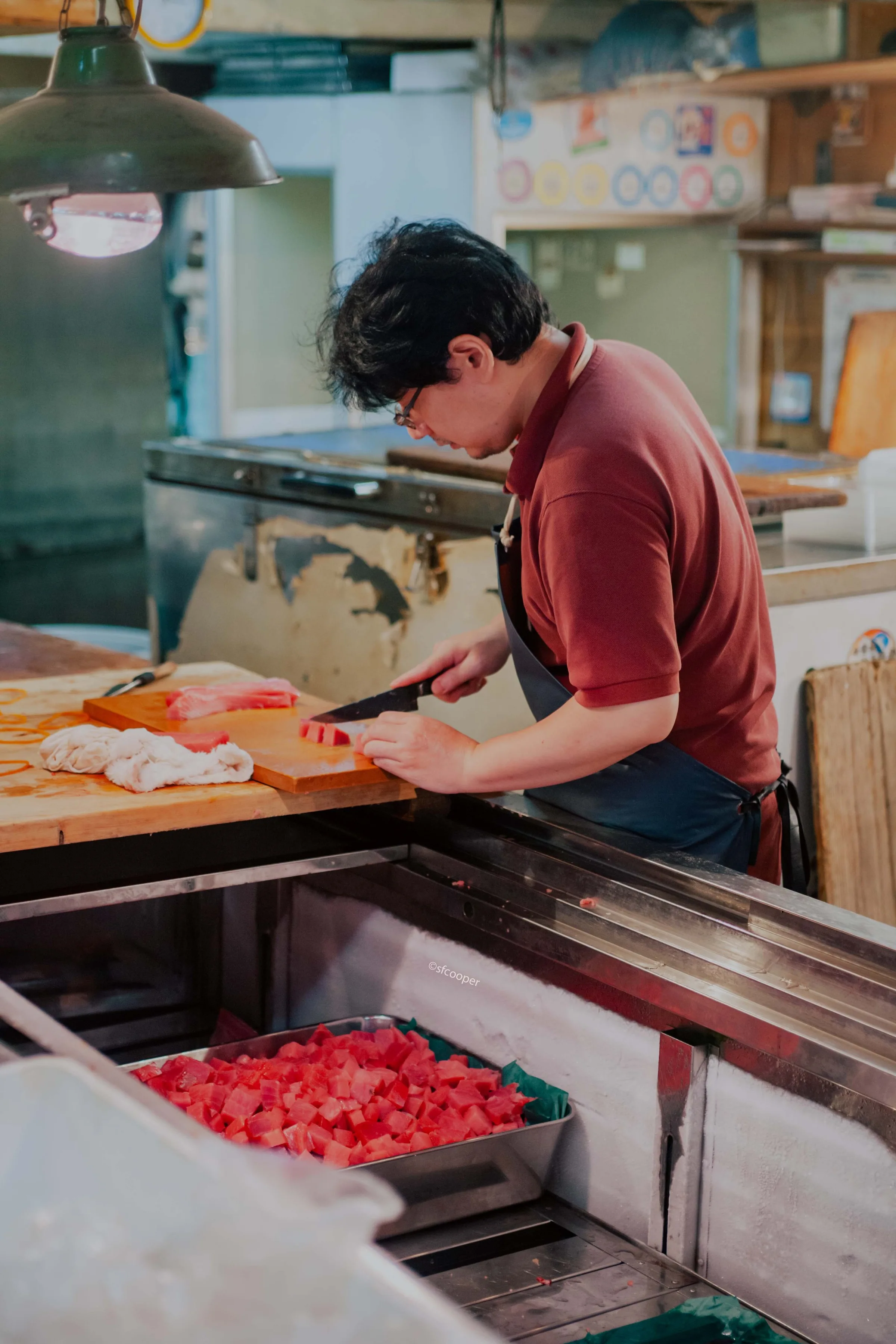
A worker in a maroon polo shirt and apron slices raw fish on a wooden board, with a tray of red cubes of fish on ice in front of them.